

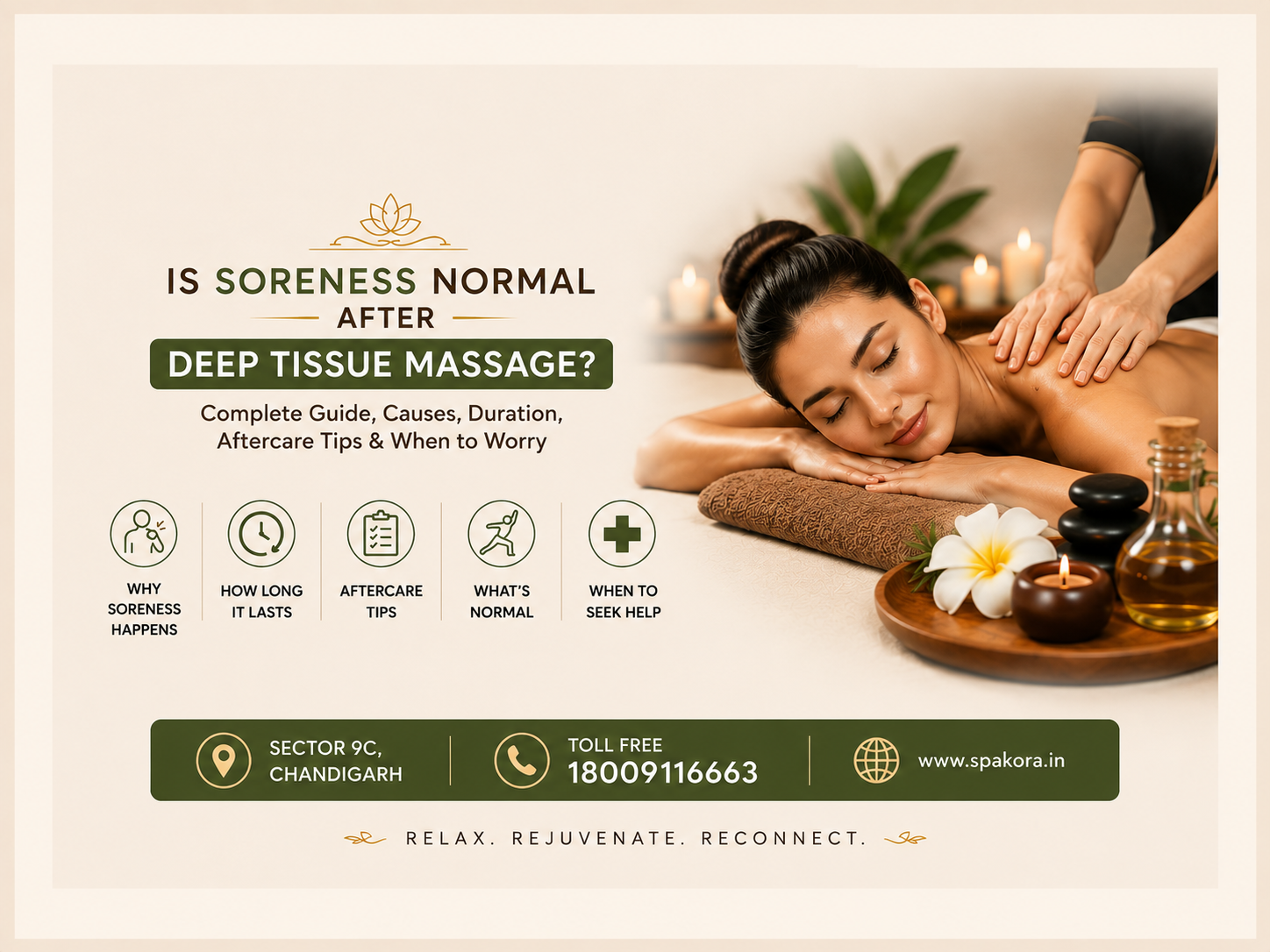
If you have ever booked a deep tissue massage and felt sore, tender or slightly stiff afterward, you may have wondered, “Is this normal?”
In many cases, mild soreness after a deep tissue massage can be normal, particularly if you are new to massage, have not had a session for a long time, or your muscles were particularly tight. Deep tissue massage uses slower, firmer pressure than many relaxation-focused massage techniques, so some temporary tenderness can occur afterward. Cleveland Clinic notes that post-massage soreness can last from a few hours to around a day and a half for some people.
However, a massage should not leave you with severe or worsening pain. Understanding the difference between normal post-massage soreness and pain that needs attention can help you have a safer and more comfortable experience.
What Is Deep Tissue Massage?
Deep tissue massage is a massage technique that uses slower movements and firmer pressure to work on deeper layers of muscle and connective tissue.
Unlike a gentle Swedish massage, which is often associated with relaxation and flowing movements, deep tissue massage is generally more focused and intensive.
People may choose a deep tissue massage when they:
- Prefer firm massage pressure
- Experience everyday muscle tightness
- Feel stiffness after physical activity
- Spend long hours sitting or working at a desk
- Want focused massage work on specific areas
- Enjoy a more intensive massage experience
A professional massage therapist should adjust the pressure according to your comfort level. Deep pressure does not have to mean painful pressure.
Is Soreness After Deep Tissue Massage Normal?
Yes, mild and temporary soreness can happen after a deep tissue massage.
Your muscles and soft tissues have been physically manipulated during the session. If an area was particularly tight or sensitive, you may notice tenderness afterward.
Cleveland Clinic explains that soreness after massage is more likely when muscles were very tense or when deeper pressure was used. Individual sensitivity also affects how someone responds to massage.
You might notice:
- Mild muscle soreness
- Tenderness when touching the treated area
- Temporary stiffness
- A feeling similar to post-workout soreness
- Slight fatigue
- Sensitivity in areas where deeper pressure was applied
These sensations should generally be manageable and improve rather than become progressively worse.
How Long Does Soreness After a Deep Tissue Massage Last?
The duration varies from person to person.
For some people, mild soreness may disappear within a few hours. Others may notice discomfort for around a day or so. Cleveland Clinic states that post-massage soreness commonly lasts from a few hours to approximately a day and a half.
If soreness is intense, continues for several days without improving, or interferes significantly with normal movement, it is worth speaking with a healthcare professional.
Remember that more soreness does not mean you received a better massage. A massage should be adjusted to your individual tolerance and preferences.
Why Do Muscles Feel Sore After Deep Tissue Massage?
There are several possible reasons.
1. Firm Pressure
Deep tissue massage uses more pressure than many relaxation massage techniques. Working more firmly on tight areas can leave the tissues temporarily tender.
2. Tight or Sensitive Muscles
If your muscles were already tense before the appointment, you may be more sensitive after they have been worked on.
3. Your First Massage
People who are new to massage may notice more soreness because their body is not accustomed to the pressure and techniques.
4. Individual Sensitivity
Everyone responds differently to massage. One person may feel completely relaxed after a deep tissue session, while another may experience mild tenderness.
5. Too Much Pressure
Pressure that is unnecessarily intense can make the experience uncomfortable. This is why communication with your therapist is important throughout the treatment.
What Should Deep Tissue Massage Feel Like?
Deep tissue massage can feel more intense than Swedish massage, but intense does not mean painful.
You may experience pressure, tenderness or a sensation that feels strong but manageable. However, sharp, burning, tingling or severe pain should not simply be ignored.
Cleveland Clinic recommends communicating with your therapist if pressure becomes too deep or uncomfortable.
A simple rule is:
Therapeutic pressure can be uncomfortable; harmful pain should be communicated immediately.
Tell your therapist if you want the pressure reduced or if a particular area feels too sensitive.
What Should You Do After a Deep Tissue Massage?
Taking care of yourself after a massage can help you stay comfortable.
Stay Hydrated
Drink water according to your normal hydration needs after your session. Hydration is part of general muscle and body care, although it should not be presented as a guaranteed way to prevent post-massage soreness.
Take It Easy
Avoid jumping straight into an intense workout if your muscles feel tender. Give your body time to relax.
Try Gentle Movement
A short walk or gentle movement can help prevent you from becoming overly stiff. Avoid movements that increase pain.
Gentle Stretching
Light stretching may feel comfortable for some people. Do not force a stretch over a painful area.
Consider a Warm Shower
A warm shower or bath can feel soothing when muscles feel tight or stiff.
Listen to Your Body
If something feels uncomfortable, do not try to “push through” it. Rest and monitor how the soreness changes.
Cleveland Clinic similarly recommends hydration, gentle stretching, warmth, rest and light activity as options that may help with post-massage soreness.
When Is Soreness After Massage NOT Normal?
Mild soreness is one thing; significant pain is another.
Contact a healthcare professional if you experience severe or persistent pain, particularly if it is not improving or is interfering with normal movement. Cleveland Clinic advises seeking medical attention when intense soreness continues beyond a couple of days.
You should also speak with a healthcare professional if you experience symptoms that suggest an injury rather than ordinary muscle tenderness.
Do not assume that severe pain is simply part of a “deep” massage.
NCCIH also advises people not to use massage as a reason to postpone medical care for a health problem.
How to Prevent Excessive Soreness After Deep Tissue Massage
You can take several simple steps before and during your appointment.
Tell Your Therapist About Your Experience
If this is your first deep tissue massage, let your therapist know.
Communicate Your Pressure Preference
Tell the therapist whether you prefer light, medium or firm pressure.
Mention Sensitive Areas
If your shoulders, lower back, legs or another area is particularly sensitive, tell your therapist before the session.
Don't Chase Pain
A stronger massage is not necessarily a better massage. The goal should be an effective and comfortable treatment.
Mention Health Conditions
Certain health conditions and medications may affect whether deep tissue massage is appropriate. NCCIH notes that forceful deep-tissue massage may need to be avoided or modified in certain circumstances, including some bleeding disorders or use of anticoagulant medication.
When in doubt, speak with your healthcare provider before booking.
Deep Tissue Massage vs Swedish Massage
If you are unsure whether deep tissue is right for you, compare it with Swedish massage.
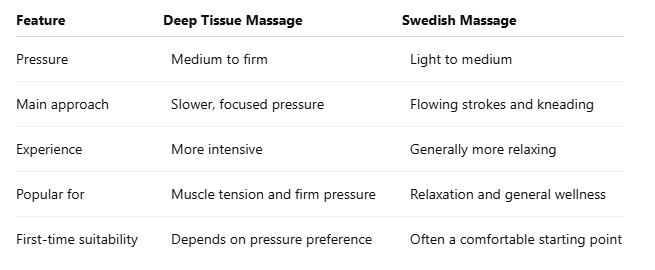
Neither massage is universally better. The right choice depends on your preferred experience.
If you want a gentler relaxing massage in Chandigarh, Swedish massage may be worth considering. If you prefer a firmer treatment focused on muscle tension, deep tissue massage may be a better fit.
Deep Tissue Massage at Spa Kora, Chandigarh
At Spa Kora, clients can choose from several massage styles based on their preferred experience, including Deep Tissue, Swedish, Aromatherapy, Thai, Hot Stone and Ayurvedic massage.
If you are considering a deep tissue massage in Chandigarh, tell the therapist about your preferred pressure and any areas of sensitivity before the session.
A professional massage experience should focus on communication, comfort and appropriate technique rather than simply applying the strongest possible pressure.
Spa Kora is located in Sector 9C, Chandigarh, and offers a range of massage and spa treatments for people looking for relaxation and wellness.
Ready to Book Your Massage?
If you want to try a deep tissue massage in Chandigarh or are unsure whether Swedish, Deep Tissue, Thai, Aromatherapy, Hot Stone or Ayurvedic massage is right for you, speak with the Spa Kora team about your preferences.
Book your appointment at Spa Kora:Call 18009116663
Frequently Asked Questions
Is it normal to be sore after a deep tissue massage?
Yes. Mild, temporary soreness or tenderness can occur after deep tissue massage, especially after a first session or when firm pressure is used on tight muscles.
How long should soreness last after a deep tissue massage?
Mild soreness may last several hours or around a day or so. If intense soreness continues for more than a couple of days or is getting worse, consider speaking with a healthcare professional.
Should a deep tissue massage hurt?
Deep tissue massage can feel intense, but severe or sharp pain is not the goal. Tell your therapist immediately if the pressure becomes painful or uncomfortable.
Is soreness a sign that the massage worked?
Not necessarily. Feeling sore does not mean you received a better or more effective massage. The appropriate pressure depends on your body, preferences and the purpose of the session.
What should I do if I am sore after a deep tissue massage?
Rest, stay normally hydrated, consider gentle movement or stretching if comfortable, and use warmth if it feels soothing. Avoid intense exercise while the area is significantly sore.
Can I go to the gym after a deep tissue massage?
If you feel comfortable, light activity may be fine, but it is generally sensible to avoid intense exercise when your muscles are significantly tender. Listen to your body and allow time for recovery.
Is deep tissue massage better than Swedish massage?
Neither is universally better. Deep tissue massage uses firmer, more focused pressure, while Swedish massage generally emphasizes flowing movements and relaxation. Your preferred pressure and goal should guide the choice.
Why am I more sore after my first massage?
Your muscles may be more sensitive to massage pressure when you are new to the treatment. The intensity of the session, muscle tightness and individual sensitivity can also affect post-massage soreness.
Can I get a deep tissue massage if I have an injury?
Do not assume massage is appropriate for an injury. Tell your therapist about the injury and consult a healthcare professional when appropriate. Some health conditions require massage to be avoided or modified.
When should I see a doctor after a massage?
Seek medical advice if you experience severe, persistent or worsening pain, significant swelling, difficulty moving the affected area or other concerning symptoms. Do not assume severe symptoms are normal post-massage soreness.
Where can I get a deep tissue massage in Chandigarh?
Spa Kora in Sector 9C, Chandigarh offers Deep Tissue Massage along with Swedish, Aromatherapy, Thai, Hot Stone and Ayurvedic massage options.
How can I book a deep tissue massage at Spa Kora?
You can contact Spa Kora directly at 18009116663 to ask about the available deep tissue massage sessions and book an appointment.